Seeing the Light: A Simple Guide to Reflection and Refraction
- Chavi Jain
- Feb 20
- 2 min read

Light is the primary way we perceive the world around us, and two of the most fundamental ways light moves are through reflection and refraction. Despite sounding similar, they describe two very different behaviors of light. Let’s understand the same.
What is reflection?
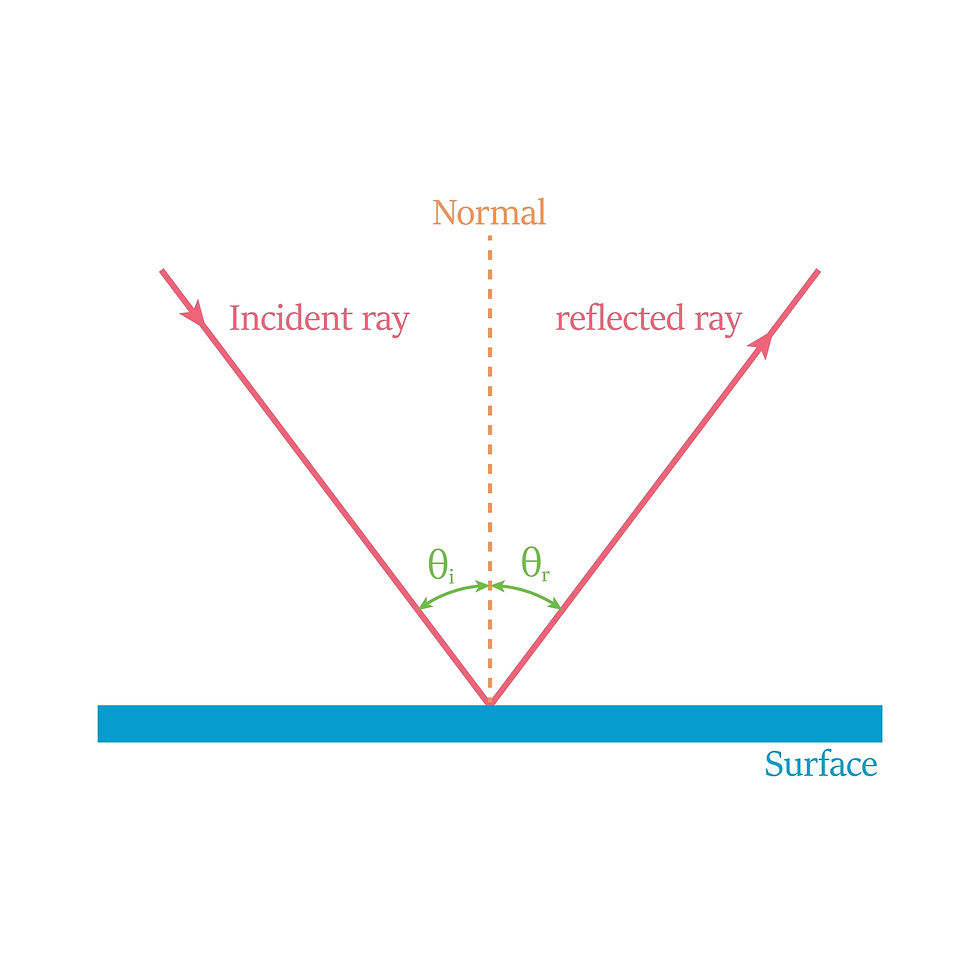
Reflection occurs when light hits a surface and "bounces" back into the same space it came from, like a ball bouncing off a wall. For reflection to happen, the light must strike a surface that does not absorb all the energy, such as a mirror, a pool of water, or a polished piece of metal. A key rule of reflection is that light always bounces off at the same angle at which it arrives. The best example of reflection is a mirror, where light rays from our faces hit it and return directly to our eyes without being distorted.
What is refraction?
Refraction is the "bending" of light that occurs when it travels from one transparent substance into another, such as moving from air into water or glass. This happens because light travels at different speeds depending on the material it is passing through; it moves faster in thin air and slower in denser water. As the light changes speed, it also changes direction. You can see this by placing a straw in a glass of water. Because the light bending in the water reaches your eyes at a different angle than the light in the air, the straw appears to be broken or shifted, even though it is perfectly straight.

What is the difference between reflection and refraction?
The primary difference between reflection and refraction lies in what the light does when it hits a boundary. While reflection is about "returning" light, refraction is about "transmitting" and "bending" light. Therefore, we use reflection to see ourselves in a mirror, but we use refraction to see through the lenses of a pair of magnifying glasses or a camera.
How do reflection and refraction work together?
A rainbow is the most famous example of this partnership. When sunlight hits a tiny raindrop in the air, the light first enters the drop and bends, which is refraction. It then hits the back of the droplet and bounces off, which is reflection. Finally, it bends one more time as it exits the water. This combination of bending and bouncing separates the white sunlight into the many colors we see in the sky.


Comments